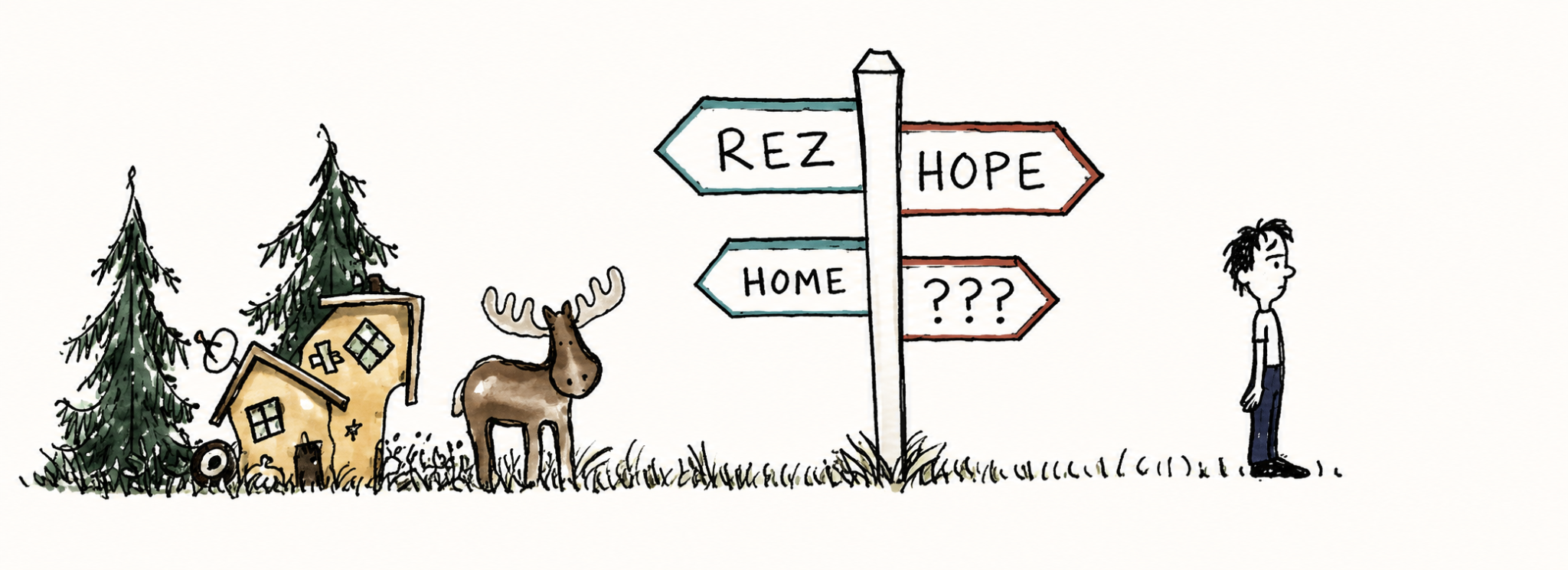
Compare an earlier moment with a later one. What changed—and what stayed complicated?
The gist
Put an earlier moment beside a later one. What is different, and what helped make it different?
Academic explanation
Character development is a change in a person’s understanding, choices, or relationships over the course of a story.
Elaboration
Name an earlier belief or situation, an event, and a later response. Explain the link. Some feelings or problems can remain even when something else changes.
Junior describes getting up after Rowdy punches him.
“But I had to stand eventually, and when I did, I knew that my best friend had become my worst enemy.” (Alexie 53)
What it shows: After Rowdy punches him, Junior sees a painful change in their friendship. The same transfer brings family support and a major personal cost.
Junior meets rejection and care at Reardan. Friendship, study, Mary’s letters, and honesty about poverty begin changing what he expects from himself and others.
Junior reflects on the shared laughter at Grandmother’s wake.
“When it comes to death, we know that laughter and tears are pretty much the same thing.” (Alexie 166)
What it shows: At Grandmother’s wake, shared laughter exists alongside sadness. Belonging can mean carrying a loss together, not making the loss disappear.
Junior briefly separates himself from the accusation.
“Well, I didn’t kill her.” (Alexie 211)
What it shows: Junior briefly separates causing Mary’s death from feeling guilty about it. His next thoughts show how hard that distinction is to hold during grief.
Defeating Wellpinit makes Junior question revenge. Mary’s death then forces him to struggle with the difference between feeling responsible and causing harm.
Junior describes the final basketball game with Rowdy.
“We didn’t keep score.” (Alexie 230)
What it shows: The final game gives Junior and Rowdy time together without making either boy’s defeat the point. Their friendship has room to continue despite unresolved differences.
As the year ends, Junior recognizes overlapping connections while remaining Spokane. Playing with Rowdy without keeping score suggests that being together matters more than defeating each other.
Junior starts out feeling trapped and ends the year seeing more ways to belong. He still has hurt to carry.
Academic explanation
Junior’s character arc moves toward a more complex understanding of identity, support, and responsibility. His growth involves revising judgments, not simply becoming popular or winning games.
Elaboration
Track change by comparing what Junior believes before and after an event. He moves from expecting rejection to recognizing real support, and from wanting revenge to considering Rowdy’s pain. Loss complicates that growth and can bring old fears back. At the end, friendship and connection remain possible without a promise that poverty, racism, grief, or disagreement have disappeared.
A label changes
Before
Rowdy reads leaving as betrayal.
What happens
He sees that Junior still loves home and imagines him traveling.
What changes
He calls Junior a nomad and reconnects through basketball.