216ethnicstudies

Chapter 29

Remembering

Study guide · Week 15Check yourself →

Class-edition pages 215–218. Cite each quotation with the printed page shown beside it—for example, (Alexie 215).

Your aimJunior decides he belongs to many tribes. Which ones, and how did he find each one?

Read and make your own notes. Turn the highlights on when you are ready to compare. Other choices can work when you explain them.

Printed page 215

Today my mother, father, and I went to the cemetery and cleaned graves.

We took care of Grandmother Spirit, Eugene, and Mary.

Mom had packed a picnic and Dad had brought his saxophone, so we made a whole day of it.

We Indians know how to celebrate with our dead.1

And I felt okay.

My mother and father held hands and kissed each other.

“You can’t make out in a graveyard,” I said.

“Love and death,” my father said. “It’s all love and death.”

Printed page 215

Printed page 216

“You’re crazy,” I said.

“I’m crazy about you,” he said.

And he hugged me.

And he hugged my mother.

And she had tears in her eyes.

And she held my face in her hands.

“Junior,” she said. “I’m so proud of you.”2

That was the best thing she could have said.

In the middle of a crazy and drunk life, you have to hang on to the good and sober moments tightly.

I was happy. But I still missed my sister, and no amount of love and trust was going to make that better.3

I love her. I will always love her.

I mean, she was amazing. It was courageous of her to leave the basement and move to Montana. She went searching for her dreams, and she didn’t find them, but she made the attempt.4

And I was making the attempt, too. And maybe it would kill me, too, but I knew that staying on the rez would have killed me, too.

It all made me cry for my sister. It made me cry for myself.

But I was crying for my tribe, too.5 I was crying because I knew five or ten or fifteen more Spokanes would die during the next year, and that most of them would die because of booze.

I cried because so many of my fellow tribal members were slowly killing themselves and I wanted them to live. I wanted them to get strong and get sober and get the hello. the rez.

It’s a weird thing.

Reservations were meant to be prisons6, you know? Indians were supposed to move onto reservations and die. We were supposed to disappear.

Printed page 216

Printed page 217

But somehow or another, Indians have forgotten that reservations were meant to be death camps.

I wept because I was the only one who was brave and crazy enough to leave the rez. I was the only one with enough arrogance.

I wept and wept and wept because I knew that I was never going to drink and because I was never going to kill myself and because I was going to have a better life out in the white world.

I realized that I might be a lonely Indian boy, but I was not alone in my loneliness.7 There were millions of other Americans who had left their birthplaces in search of a dream.

I realized that, sure, I was a Spokane Indian. I belonged to that tribe. But I also belonged to the tribe of American immigrants.8 And to the tribe of basketball players. And to the tribe of bookworms.9

And the tribe of cartoonists.10

And the tribe of chronic masturbators.

And the tribe of teenage boys.11

And the tribe of small-town kids. And the tribe of Pacific Northwesterners.12

And the tribe of tortilla chips-and-salsa lovers.13

And the tribe of poverty. And the tribe of funeral-goers.14

And the tribe of beloved sons.

And the tribe of boys who really missed their best friends.15

It was a huge realization.

And that’s when I knew that I was going to be okay.

But it also reminded me of the people who were not going to be okay.

It made me think of Rowdy.

I missed him so much.

Printed page 217

Printed page 218

I wanted to find him and hug him and beg him to forgive me for leaving.16
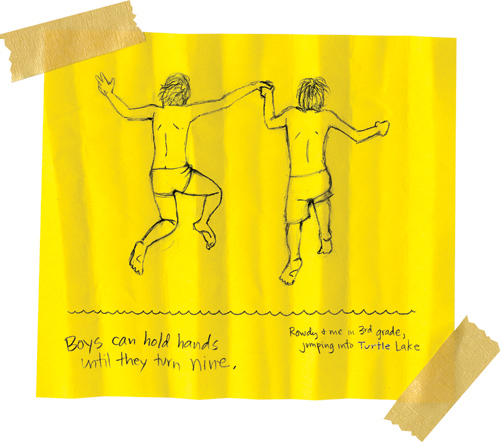
Cartoon from printed page 218 of the novel.
Illustration on printed page 218
Printed page 218

Sherman Alexie, The Absolutely True Diary of a Part-Time Indian · printed pages 215–218. Parenthetical citations use author and printed page: (Alexie 215).

After reading

What happened?

Remembering loved ones with his parents leads Junior to think about the many groups he belongs to. He keeps his Spokane identity while recognizing connections through reading, basketball, art, family, grief, and leaving home.

Close-reading practice
Aim evidenceConnections

These are possible notes. A different detail can be useful if you can explain your choice.

Reading practice · Chapter 29

Belonging to a family and a people

“Junior,” she said. “I’m so proud of you.”1 That was the best thing she could have said.2 In the middle of a crazy and drunk life, you have to hang on to the good and sober moments tightly.3 I was happy. But I still missed my sister, and no amount of love and trust was going to make that better.4

I love her. I will always love her.5 I mean, she was amazing. It was courageous of her to leave the basement and move to Montana.6 She went searching for her dreams, and she didn’t find them, but she made the attempt.7 And I was making the attempt, too.8

And maybe it would kill me, too, but I knew that staying on the rez would have killed me, too.9 It all made me cry for my sister. It made me cry for myself. But I was crying for my tribe, too.10 I was crying because I knew five or ten or fifteen more Spokanes would die during the next year,11 and that most of them would die because of booze.

I cried because so many of my fellow tribal members were slowly killing themselves and I wanted them to live.12

Sherman Alexie, The Absolutely True Diary of a Part-Time Indian (Alexie 216). Selected passage from the course plan.

Try it, then compare

Which groups still connect Junior to other people? Give two details from this passage.

One possible explanation

Junior belongs with his family and with the Spokane people. His mother says she is proud of him. He misses Mary and wants his tribal members to live. His move has not erased these bonds.

Reading practice · Chapter 29

More than one tribe

Selected sections; […] shows where text has been left out.

It’s a weird thing. Reservations were meant to be prisons, you know? Indians were supposed to move onto reservations and die. We were supposed to disappear.1 But somehow or another, Indians have forgotten that reservations were meant to be death camps.

I wept because I was the only one who was brave and crazy enough to leave the rez. I was the only one with enough arrogance.2 I wept and wept and wept because I knew that I was never going to drink and because I was never going to kill myself and because I was going to have a better life out in the white world.

I realized that I might be a lonely Indian boy, but I was not alone in my loneliness.3 There were millions of other Americans who had left their birthplaces in search of a dream.4 I realized that, sure, I was a Spokane Indian. I belonged to that tribe.5

But I also belonged to the tribe of American immigrants.6 And to the tribe of basketball players. And to the tribe of bookworms. And the tribe of cartoonists.7 […] And the tribe of teenage boys. And the tribe of small-town kids. And the tribe of Pacific Northwesterners.

And the tribe of tortilla chips-and-salsa lovers.8 And the tribe of poverty. And the tribe of funeral-goers.9 And the tribe of beloved sons.10 And the tribe of boys who really missed their best friends. It was a huge realization. And that’s when I knew that I was going to be okay.

But it also reminded me of the people who were not going to be okay.11 It made me think of Rowdy. I missed him so much. I wanted to find him and hug him and beg him to forgive me for leaving.12

Sherman Alexie, The Absolutely True Diary of a Part-Time Indian (Alexie 216–218). Selected passage from the course plan.

Try it, then compare

Choose three tribes. For each one, name an experience that helped Junior find it.

One possible explanation

He is still Spokane because it is his people and home. He belongs with basketball players through his teams. He belongs with readers through books and his friendship with Gordy. These groups let him have more than one kind of belonging.

Evidence to consider

Explain why shared experience matters

Junior recognizes a feeling he shares with other people.

“I realized that I might be a lonely Indian boy, but I was not alone in my loneliness.” (Alexie 217)

What it shows: Junior feels lonely but discovers that other people know that feeling too. Shared loneliness becomes one way to recognize a connection.

Read in the chapterThemes

Keep his Spokane identity in the picture

Junior explicitly affirms his Spokane identity.

“I realized that, sure, I was a Spokane Indian. I belonged to that tribe.” (Alexie 217)

What it shows: Junior explicitly says he belongs to the Spokane tribe. His later list adds forms of belonging rather than replacing his Native identity.

Read in the chapterCharacters

Trace a connection to a journey

Junior uses “tribe” figuratively to connect his experience with other journeys.

“But I also belonged to the tribe of American immigrants.” (Alexie 217)

What it shows: Junior compares his search for a different life with other people’s journeys. Here “tribe” is a figure of speech for shared experience.

Read in the chapterThemes

Trace a connection to a relationship

Junior thinks about how much he misses Rowdy.

“And the tribe of boys who really missed their best friends.” (Alexie 217)

What it shows: Missing Rowdy connects Junior to other boys who miss a close friend. A painful feeling becomes a bond he can recognize beyond himself.

Read in the chapterCharacters

Connect groups to things he does

Junior names groups connected with activities he does.

“And to the tribe of basketball players. And to the tribe of bookworms. And the tribe of cartoonists.” (Alexie 217)

What it shows: These groups grow from playing, reading, and drawing. For each group, use an earlier scene to explain how he found that connection.

Read in the chapterThemes

Trace a family bond to a moment

Junior’s mother tells him she is proud of him.

“I’m so proud of you.” (Alexie 216)

What it shows: Mom tells Junior she is proud of him. This moment helps explain his later description of belonging among “beloved sons.”

Read in the chapterCharacters
Track the people
Junior

Recognizes overlapping identities without abandoning his Spokane identity.

Mom

Affirms him and joins the cemetery visit.

Dad

Shares family remembrance.

Mary, Grandmother, and Eugene

Remembered by the family.

Rowdy

Still missed as Junior thinks about belonging.

Use your notes to build the Aim Response →